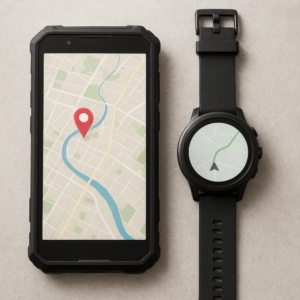
Nerio Defense is extending sweTAK from the phone to the wrist. A purpose-built sweTAK Watch application for Garmin brings tactical functions and health awareness to the soldier’s arm, phone health integrations open the same capability to users of other wearables, and a dedicated smart ring is under evaluation. All of it keeps data in the unit, on the devices the soldier carries.
sweTAK is Nerio Defense’s tactical awareness system for the dismounted soldier and the small unit: shared position, events and requests on a phone, over the unit’s own links. The phone is the right place for the map and the planning. It is the wrong place for a glance under fire, with gloves on, in the dark. That is what the wrist is for.
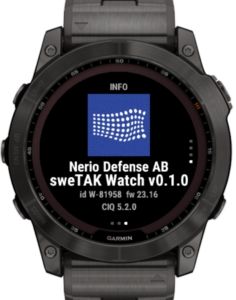
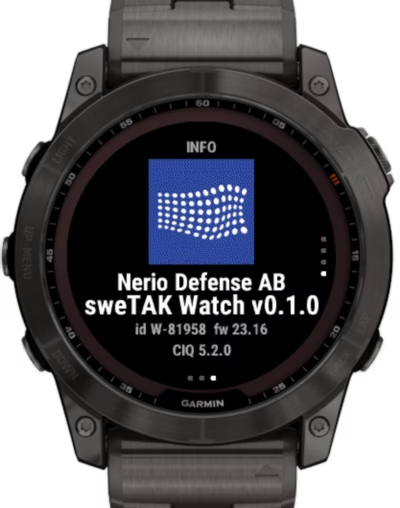
A sweTAK Watch application built for Garmin
The sweTAK Watch application is our own software for Garmin’s tactical and outdoor watches, not a notification mirror and not a fitness app with a camouflage theme. It was designed around three questions a soldier asks without looking for long: where are we, what is happening, and how am I doing.
- Situational awareness at a glance. Heading in military units, position in the grid format the unit works in, the direction and distance to what matters. Large elements, high contrast, readable in a second.
- The unit’s events on the wrist. Alerts, requests and messages from sweTAK reach the watch as a prioritised feed with a clear vibration pattern, so the phone can stay in the pocket.
- Signals from one button. A soldier can send pre-agreed signals to the team from the watch alone, with a single hand, without unlocking anything. Which signals, and how, belongs to the unit.
- Health awareness. Heart rate, oxygen saturation, heart-rate variability and the watch’s own recovery measures are collected on the wrist and turned into a readiness picture on the phone, for the soldier and, where the unit chooses, for the leader.
The watch is deliberately a simple collector and display. The analysis happens on the phone, which keeps the watch lean, keeps its battery for the mission and keeps every decision rule in software the unit controls.
Direct link, no cloud
The watch and the phone talk to each other directly over a short-range link. Garmin’s cloud services are not involved, no account is required, and nothing about the soldier’s position or health leaves the pair of devices unless the unit’s own sweTAK network carries it. The interaction design follows the same principle as the rest of sweTAK: usable with gloves, low attention, no accidental exits, and a battery budget measured against real operations rather than a day at the office.
Apple Health and Health Connect: the same picture from any wearable
Not every soldier has a Garmin. sweTAK can therefore also read health data from the phone’s own health store, Apple Health on iOS and Health Connect on Android. Any wearable that writes to that store then feeds the same readiness picture, read-only and on the device. The user chooses: collect nothing, collect from the phone’s health store, or collect from the Garmin link. Turning collection off removes every health element from the app.
The two modes are honest about their differences. The Garmin link gives near-real-time data and signals on the wrist. The phone health store gives a slower, periodic picture with no real-time alerts, and the app says so on screen rather than pretending otherwise.
Next: a dedicated ring
We are also evaluating a dedicated smart ring as a health sensor for sweTAK. A ring is discreet, does not occupy the wrist, runs for days on a charge and measures continuously while the soldier sleeps and rests, which is exactly when readiness is decided. The work is at an early stage and follows the same rules as everything above: the soldier’s data stays with the soldier and the unit.
Why it matters
A leader who can see that a team member has been running on no sleep for two days, and a soldier who can send a signal and read a heading without taking a hand off the weapon, are both safer. sweTAK on the wrist is about those small, repeated moments, built on the discipline that has shaped sweTAK from the start: the unit owns its data, and the tools work where the soldier is.
Nerio Defense builds sweTAK with and for operational users. Contact us to discuss evaluations.